Identity death as a software engineer
Building software has radically changed in the last 6 - 12 months. Like many other developers, I've gone from living in a code editor, writing code by hand (with some co-pilot AI autocomplete), to working in the terminal, 'orchestrating' AI agents that write every single line .
I've actually been loving the process i've developed recently, but it wasn't all sunshine and rainbows. I went through a pretty brutal slump/existential crisis, and from what I see online, a lot of devs have gone through the same thing - and are yet to come out the other side of it.
If I don't write code anymore, what is my value?
The aforementioned slump boils down to the above question. I was really good at writing code and producing features quickly.
My USP as a dev was always speed. I could produce products very fast compared to the average dev. My route into software wasn't the standard. I don't have a Computer Science degree. I needed to find a way to standout against CS grads. And that was speed and an interest in the product and end-user.
And now, this machine had come along and could produce code at lightning speed (albeit at lower quality/more mistakes... for now), and was improving every few months exponentially.
This was a direct hit to my sense of self worth. I, like many people - though they may not realise it - derived a large portion of my sense of meaning from how good I was at my job. And my job, at least 50% of it (at times more), was writing code.
Building software in 2025
I'd begun using AI in 2024, but 2025 was when I started primarily 'writing' code via agents.
Still in a code editor (Cursor), my job became translating product requirements into pseudo-code in my head, then translate that pseudo-code into a prompt for an AI agent chat, and then sit and watch that agent do a (pretty sloppy) job of implementing it, with lots of back and forth and corrections.
It ultimately felt like I was training a junior developer who had their memories wiped every night - each fresh session involved an explanation of where we were in the codebase, which files to look at, the patterns to follow, etc.
It was a chore, and it was miserable. It felt purposeless.
Enter stage left, Claude Code
During the Christmas break of 2025, I finally decided to give Claude Code a try. I'd put it off for so long because I simply couldn't imagine not using a code editor. How could I do my job without seeing the code being produced?!
It turns out, pretty easily.
I hadn't quite realised it, but the latest generation of AI models (specifically, Opus 4.5) had crossed an important threshold when it came to everyday coding.
The models were now good enough (with the right techniques) to work with you on a spec, then break that spec down and work through it end-to-end, and produce a relatively good output, without the need for me to babysit the implementation.
So, what was I to do whilst my agent was busy building the feature?
Spin up another agent of course! This change unlocked the ability to work on multiple features at once. Whilst one agent worked, I'd build up a spec and set off another agent to build the next thing, or a fix a bug, or explore a spike of whatever random idea I wanted to try out.
Building software in 2026
Since that fateful December break, my process has incrementally changed, day by day, month by month, to be completely unrecognisable from anything I could have imagined in 2025.
I rarely even type anymore. I'm usually in CNVS (A tool to orchestrate agents), using my voice to talk to an agent that spins up other agents to build the stuff I need.
I use Git worktrees (which I hadn't heard of until Jan 2026) to be able to work on totally separate features at the same time.
The things I'm building go through automatic workflows where a swarm of agents build, then another swarm reviews that work, then back to build, then an agent to visually verify everything in a browser, take screenshots, and create a PR for me to review.
I have a suite of skills that I or my agents can use depending on what I need at that moment, to plan a feature, create linear tickets, write good tests, etc.
I've shipped features at work that would have taken me two weeks in the old world (the old world being 6 months ago) in a day, whilst working on multiple other things!
I shipped a side project in a Saturday afternoon that earned me my first internet money.
The capabilities we now have at our disposal are so powerful - and there is joy to be found in finding how best to use them.
So, what is my value now?
My value, and my craft, is creating products with software.
And it always was. Coding was a means to an end.
And I'm actually better at this with AI. I can focus my own processing power on what to build, instead of the implementation itself. I'm closer to the product, and to end users.
I can also make incremental improvements, kick off experiments, and tackle tech debt, all in the background with agents. I can spend 15 minutes to kick something off and come back at the end of the day to review it.
I think the main reason many developers are struggling with this new world is because their identity is tied up in being a programmer. We don't really program anymore - the agents do.
And another reason is because coding is, or was, fun. It was an easy route into flow state. I would regularly lose track of time writing code. I loved trying out new frameworks and ways of writing code.
It's possible I won't ever find that exact same feeling again in my work. It's true that it's harder to find flow coding with agents - at least for now. But it IS possible.
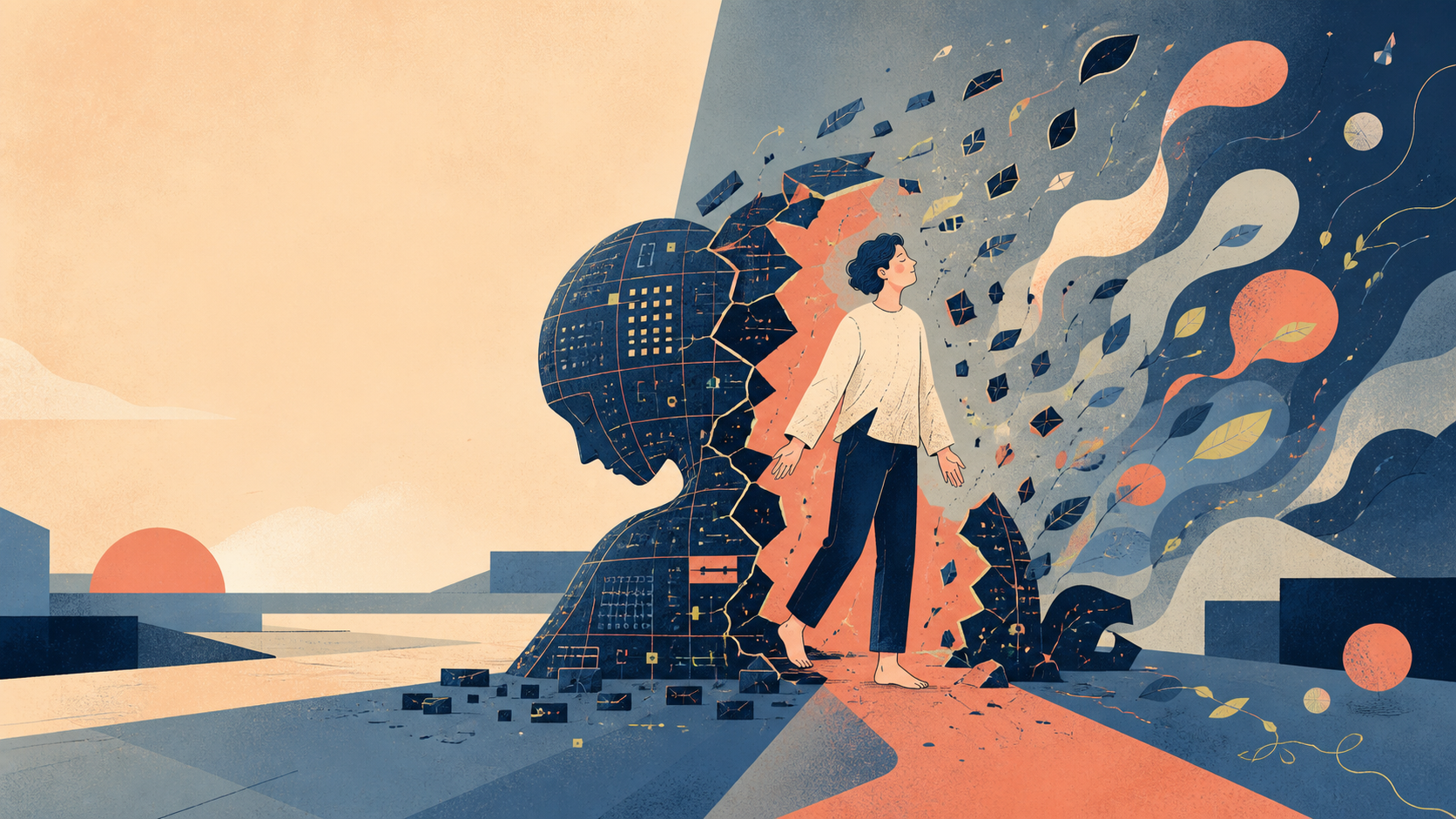
I had to put my identity as a 'coder' and programmer to rest. My job isn't to write code anymore - it's to build products. Really, it always has been. Writing code by hand was just the best way we'd found to do it.
And whilst I may not be able to replicate the feeling of coding, I have found other, new experiences that are different, but equally fun - tinkering with my agent harness and workflows to get better outputs and using AI to teach me stuff (like how a browser really works).
I also don't think we can, or will, go back.
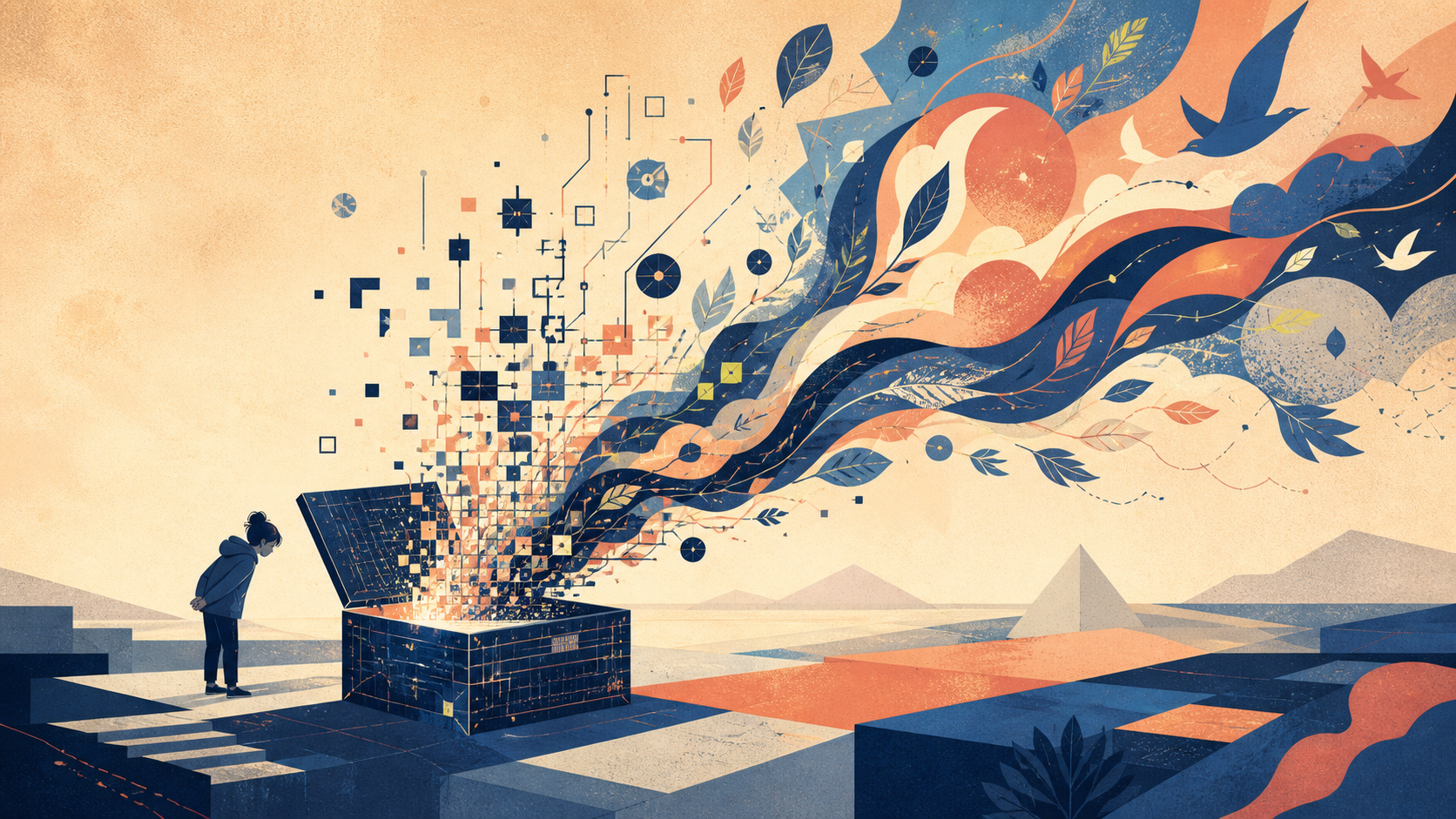
AI is a pandora's box. You can either be dragged into the future kicking and screaming, or you can get ahead of the game now and be at the forefront of the new world.